








Candyman
2021
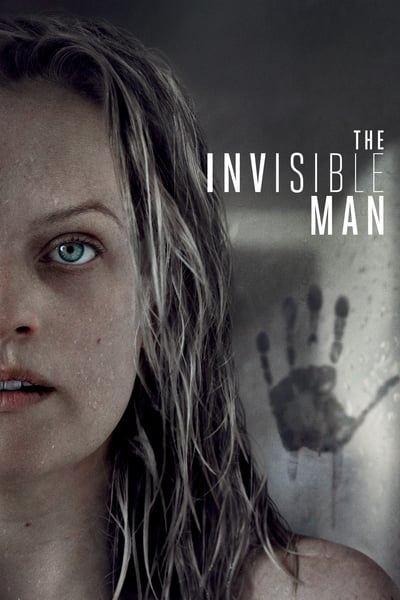
When Cecilia's abusive ex takes his own life and leaves her his fortune, she suspects his death was a hoax. As a series of coincidences turn lethal, Cecilia works to prove that she is being hunted by someone nobody can see.
Jane Griffin
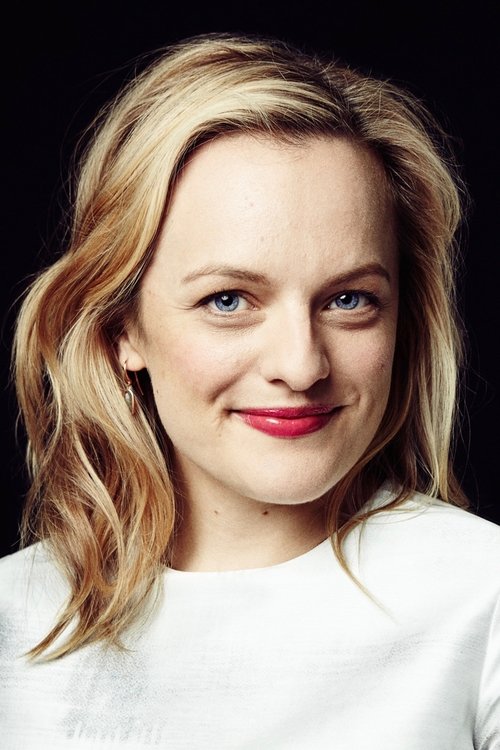
Cecilia Kass
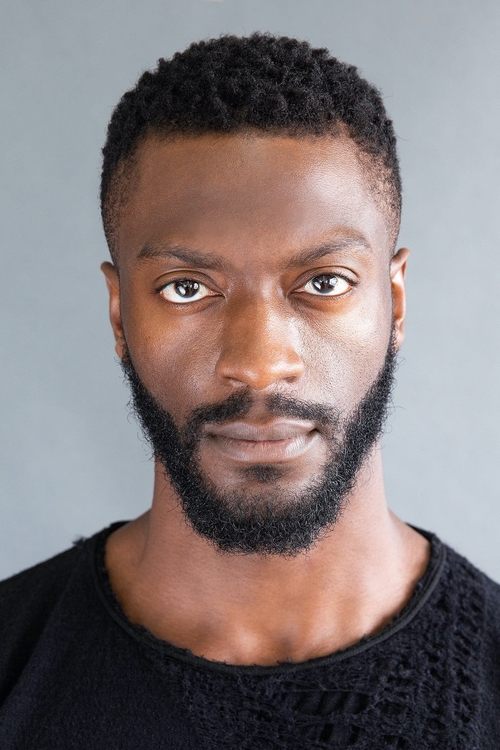
James Lanier
Sydney Lanier
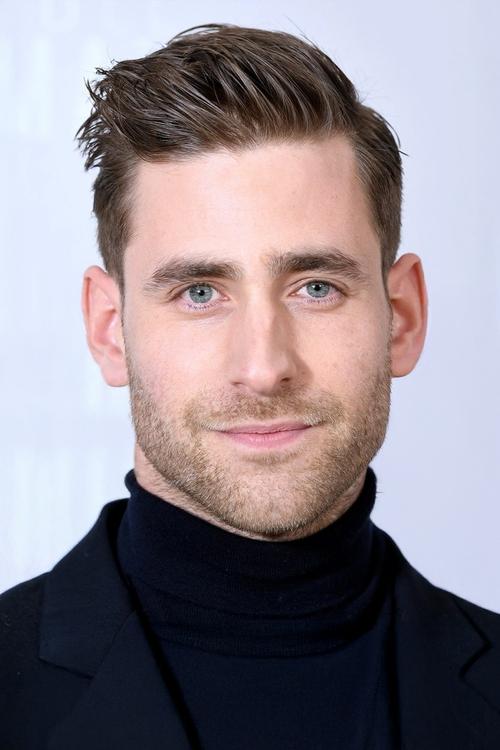
Adrian Griffin
Tom Griffin
Emily Kass
2/25/2020
6/10
While 'The Invisible Man' isn't perfect, it is (like 'Upgrade') a thoughtful take on the genre, cleverly using on- and off-screen space and delivering each big scare like an effectively-timed punchline. - Jake Watt Read Jake's full article... https://www.maketheswitch.com.au/article/review-the-invisible-man-paranoia-gaslighting-and-spookiness
3/14/2020
4/10
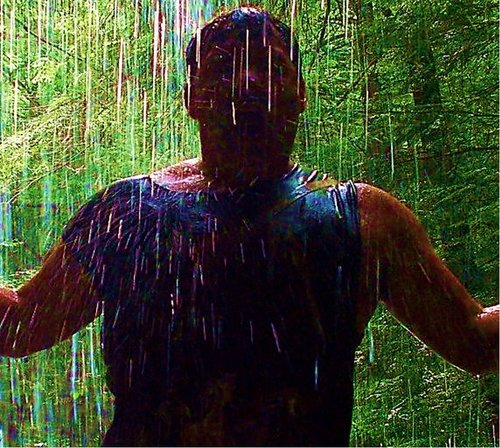
**_Starts brilliantly but ultimately undermines itself with plot contrivances and genre foolishness_** >_I went over the heads of the things a man reckons desirable. No doubt invisibility made it possible to get them, but it made it impossible to enjoy them when they are got._ - H.G. Wells; _The Invisible Man_ (1897) H.G. Wells's original _The Invisible Man_ (1897) suggests that rather than something as powerful as invisibility being used for the betterment of mankind, it would instead be used to fulfil private desires, ultimately leading to the moral corruption of otherwise good men. In probably the best cinematic adaptation, Paul Verhoeven's _Hollow Man_ (2000), this is taken much further, with the suggestion that the results of invisibility would be nothing less than sexual violence, evil, and madness. However, despite the centrality of this theme in the core story, reframing the template as a modern tale of domestic abuse and PTSD, as happens in this latest adaptation, is a fascinating idea. Reorienting the narrative so it no longer focuses on the male scientist but on a female victim of his machinations creates the potential for some timely #MeToo social commentary, particularly as it relates to issues of not believing women who accuse powerful men of gaslighting. But potential only gets you so far, and what could have been a really insightful film eventually proves itself relatively incapable of using issues of domestic abuse as anything other than plot points to get from one predictable scare to the next. It tries to have its cake and eat it – it wants to be an allegory for the problems women face leaving abusive relationships but it also wants to be an effective monster movie. And, ultimately, it ends up as neither. The film begins as Cecilia Kass (Elisabeth Moss) is putting into motion a plan to leave her domineering and abusive boyfriend, Adrian Griffin (Oliver Jackson-Cohen), a wealthy pioneer in optics. Having drugged him, she leaves their high-tech home in the middle of the night and is picked up nearby by her sister Emily (Harriet Dyer), who takes her to stay with their childhood friend, James Lanier (Aldis Hodge), a policeman living with his daughter Sydney (Storm Reid). Although assured that Adrian can't find her, Cecilia is clearly suffering from agoraphobia and paranoia. That is until Adrian commits suicide. Contacted by his brother Tom (Michael Dorman), who's handling his estate, Cecilia learns that Adrian has left her $5 million. However, despite her best efforts to move on, she just can't shake the feeling that Adrian is still around, watching her, sometimes even in the same room as her. And the surer she becomes that he's not dead, the more everyone else becomes worried about her mental well-being. Written and directed by Leigh Whannell (co-creator of the _Saw_ franchise and creator of the _Insidious_ franchise), this latest adaptation of Wells's original is not actually about the invisible man. Indeed, short of a background shot of him lying in bed, a shot showing only his torso as he runs through a forest, and a close-up of his hand, actor Oliver Jackson-Cohen doesn't even appear on screen prior to his apparent suicide. Adrian is not only the invisible man of the plot, so too is his character ideologically invisible. Which makes its own statement, and it's a statement worth making – men like him don't need to be present to continue to cause harm; years of abuse will carry on their work even if they're no longer around. In this sense, at least initially, the film is more concerned with the fear Adrian has instilled in Cecilia; in the early stages, Cecilia's main enemy isn't Adrian so much her inability to move on from him. Along the same lines, the film looks at issues of how women who accuse powerful men of gaslighting are often ignored or openly disbelieved. It is, of course, allegorical insofar as Cecilia isn't claiming that Adrian is just gaslighting her, she's claiming that he's literally turned himself invisible to drive her insane, but some of the best allegory works by exaggeration, and/or rendering something abstract as something more tangible. Aesthetically, the film looks terrific. Designed by Alex Holmes (_Wish You Were Here_; _The Babadook_; _The Nightingale_), Adrian's house is a modernist maze of glass, mirrors, sliding panels, and open space, and the ultra-high-tech nerve centre from which he controls his kingdom is one of the film's only overt nods to science fiction (aside from the whole invisibility thing, of course). The real aesthetic strength, however, is the cinematography by Stefan Duscio (_Jungle_; _Upgrade_; _Judy & Punch_), into which is built Cecilia's paranoia. For example, countless scenes involve the camera panning away from her, moving across the room, showing us nothing at all, and then panning back. Ordinarily, this would be textbook unmotivated camera movement, but here it conveys how Cecelia fears there may be something in the corner to which we panned. And now, thanks to that camera pan, so do we. There are also many shots which in another film would be awful framing; isolating Cecilia in the frame and filling up so much of the screen's real-estate with empty negative space. Except, again, in this film, such negative space has an ominousness not applicable to regular thrillers. In this way, Whannell can instil fear and dread simply by pointing the camera at an empty room without the need for any FX, VFX, makeup, elaborate props etc (which no doubt played a significant role in keeping the budget down to a minuscule $7 million). And I'd be remiss if I didn't mention Moss's performance, which is excellent, especially given that so much of it is her on her own reacting to nothing whatsoever, having to communicate confusion, fear, anger etc through little more than her expression. Before talking about why I didn't like the film, however, I want to reiterate that I honestly can't say how much I admire the idea to reconstitute the genre template as a story about domestic violence. And it's an especially timely reconstitution, coming as it does in the era of #MeToo, when so many powerful men, once considered invisible in everything but name, able to perpetrate their crimes with impunity, have been revealed as the monsters they are. So I have no problem with the ideological paradigm shift. My problem is with the execution. For one thing, we know from the get-go that Cecilia isn't imagining things, that Adrian faked his suicide and is now stalking her whilst invisible. This isn't a twist, and the film makes no attempt to hide it. Granted, this is kind of unavoidable given how well-known the property is, but had the film allowed for even a little bit of ambiguity, it could have done wonders for emotional complexity, turning a story about invisibility into a story possibly about mental collapse. This would have effectively placed the audience in the same position as the other characters, doubting Cecilia's state of mind, which would, in turn, have enhanced the potency of the socio-political allegory. Another thing that bothered me is that in a film so focused on surveillance and privacy, there are several scenes where if there is even one functioning CCTV camera, the movie ends. A pivotal scene in a restaurant is an especially egregious example of this – one grainy image from a camera, and Cecilia can prove she's not going nuts and the whole plot unravels. Also, if you were so convinced that you were being stalked by someone invisible, might it not occur to you to invest in a pair of IR glasses for a few hundred bucks on Amazon? Just a thought. However, my biggest problem is that what starts as a fascinating study of the lasting ramifications of domestic violence ultimately descends into genre stupidity, with a ridiculously over-the-top final act that says nothing of interest about anything. True, _Hollow Man_ has a pretty over-the-top final act too, but _Hollow Man_ never saw itself as anything other than a schlocky genre affair, whereas _The Invisible Man_ clearly does. The fact that Whannell ultimately undermines himself in this way, deploying such important themes merely to get him to the gory _dénouement_, is especially frustrating insofar as he genuinely did originally seem to have some interesting things to say. Tied to this is that Adrian is introduced as such an abhorrent character from the start; he's essentially a comic book villain, void of nuance or subtlety. Domestic abusers aren't monotone evil-doers, otherwise everyone would see through then. Oftentimes, they're very charming on the surface, and any film claiming to be a serious examination of this topic would make room to address this. Although _The Invisible Man_ was very well reviewed and a huge box-office hit, it left me disappointed and frustrated. Initially positioning itself as an insightful allegory for the difficulty victims of domestic abuse have in moving on with their lives even after the abuser is gone, it eventually privileges genre beats and cheap thrills over emotional complexity. Which is a huge shame and a massively missed opportunity.
3/30/2020
2/10
If you want to watch this, don't. If you want to watch an 'invisible man' movie, watch the original 'The Hollow Man'. I actually had to rewatch 'The Hollow Man' just to wash my eyes after this. The manlet of a woman in this movie that they call an actress is 100 times worse than Rhona Mitha's performance in 'The Hollow Man'.
5/2/2020
1/10
This is a film that tries to be smart and clearly isn't. It has more holes than a colander containing Swiss cheese being held by Christ. This film thinks it's so edgy when it couldn't be further from it. It's a low budget, badly acted, dire attempt to contemporise a classic story. Do yourself a favour and don't bother.
6/6/2020
7/10
Well made horror-thriller that takes the classic version updated for today with not only the effects but violence, which was very effective. A little predictable in some respects but ultimately entertaining and features a good performance by Elisabeth Moss. Going the more lower budget with Universal's "monster" remakes the best route, hopefully they learned their lesson from blunders of The Mummy. **3.75/5**
9/22/2020
8/10
Great watch, will watch again, and do recommend. This really is a "what if" they extended the scenes from "Hollow Man" where Kevin Bacon gets into the public and starts messing with people. I am starting to worry about Elisabeth Moss though, she seems to be type-casting into all these heavy handed dramatic roles, or maybe that's just how she acts. She's certainly good enough to pull it off, so it's not a downside of the movie, it's just part of a note that this movie is very much a slow-burn suspense. On the premise alone, the first 2 acts are going to be that way as it is established that she is / isn't crazy and there is an invisible man stalking and sabotaging her. My biggest problem with the movie is that there has never been a more plausible and clearly reasoned explanation for the events, to include camera footage and dead bodies, than she has in this story. If someone finalized a version of a wearable inviso-suit, then this is exactly the type of nonsense they're going to get up to, especially if no one knows about it. It is a little irritating how they handle him once he's been exposed as well. Mostly it's because of the premise that no one believes her, but you'd think people had seen a ghost movie, or would have a clever idea. If the movie sounds good to you at all, then I really think you'll enjoy it.
10/21/2020
8/10
An excellent adaption of the Universal classic. Wholly original, modernized, and thrilling, building off writer/director Leigh Whannell's fantastic science fiction debut Upgrade.
8/27/2022
8/10
**The Invisible Man tells a story we have seen too many times in a fresh, terrifying, and ASTOUNDING way!** Blumhouse's reimagining of The Invisible Man is PURE BRILLIANCE as it tells of a woman surviving a dangerously abusive relationship only to question if she had truly escaped. Paranoia and anxiety saturate every moment of The Invisible Man. Elizabeth Moss's performance of terrified but strong Cecelia makes the Invisible Man believable and all the more chilling. Director Leigh Whannell comes fresh off of the extraordinary Upgrade (2018) to deliver another unique and innovative horror must-see. Blumhouse is the clear powerhouse of horror films, and The Invisible Man is one of their best.
5/15/2023
7/10
The Invisible Man, directed by Leigh Whannell, delivers a solid story with many twists and turns that keep the audience guessing. While the pacing is slow and the final reveal lacks a bit of punch, the film has a decent amount of suspense that keeps the tension high. The acting in the film is fantastic all around, with Elisabeth Moss delivering a brilliant performance as the lead character, conveying fear and helplessness in a way that is both honest and heartbreaking. Aldis Hodge also delivers a standout performance, bringing a calm but intensely serious attitude to his role that creates a sense of trust not only with Moss’s character but with the audience as well. Storm Reid also surprises with a performance that adds a sense of lightheartedness to an otherwise dark and depressing screenplay. Leigh Whannell's direction is stellar, with some really creative imagery that explores the unique concept of invisibility. The scene in the mental hospital stands out as a highlight, with brutal action and sharp camera angles that keep the audience engaged. In conclusion, while The Invisible Man may have its flaws, it is a solid thriller that benefits from excellent performances and fantastic direction. Fans of suspenseful movies will find plenty to enjoy here, even if it's not the scariest film out there. Score: 71% Verdict: Good
5/8/2025
5/10
**_Eerie atmosphere and well-done scenes mixed with tedium and eye-rolling bits_** A woman (Elisabeth Moss) escapes her abusive husband and their incredible coastal mansion outside of San Francisco, but she can’t help but suspect that her optics specialist spouse is manipulating things, unseen, which makes her seem crazy to others. "The Invisible Man” (2020) is not a remake of the 1933 classic movie, which was based on HG Wells’ 1897 novel, but rather a totally new story in the modern day with a very different method of attaining invisibility. It starts in an artistic way with mysterious intrigue, similar to the excellent beginning of “Resident Evil” (2002) before morphing into a slow-burn flick about possible paranoia, reminiscent of the bulk of “Rosemary’s Baby.” Then there’s the emphasis on toxic masculinity and female empowerment with the addition of black man good, white man evil. I normally wouldn’t notice or mind, but it's just so glaring here it’s eye-rolling. Moss is serviceable and fits the role, but her character is hampered by a perma-frown and Halloween eyes, which isn’t good for the viewer since she’s the focal point of the entire (overlong) story. As such, the film would've been more effective with someone more easy-on-the-eyes like Amy Adams, Rachel McAdams or ScarJo in the lead role, even JLaw. The flick works up some good artistic mood, but it’s so slooow I can’t see it working on repeat viewings. Nevertheless, there are a couple of great scenes, like the shocking restaurant episode. Moreover, the basis for the invisibility is interesting, as well as believable, compared to a magical serum. It runs 2 hours, 4 minutes (with 13 minutes of that being end credits). It was shot in New South Wales, Australia, including Sydney and the corresponding Disney Studios, as well as places south of there, like Kiama and the Headland House in Gerringong. GRADE: C+
2021
2019
2020
1996
2018
2019
2018
2019
2008
2019
2018
2022
2018
2019
2018
2022
2018
1988